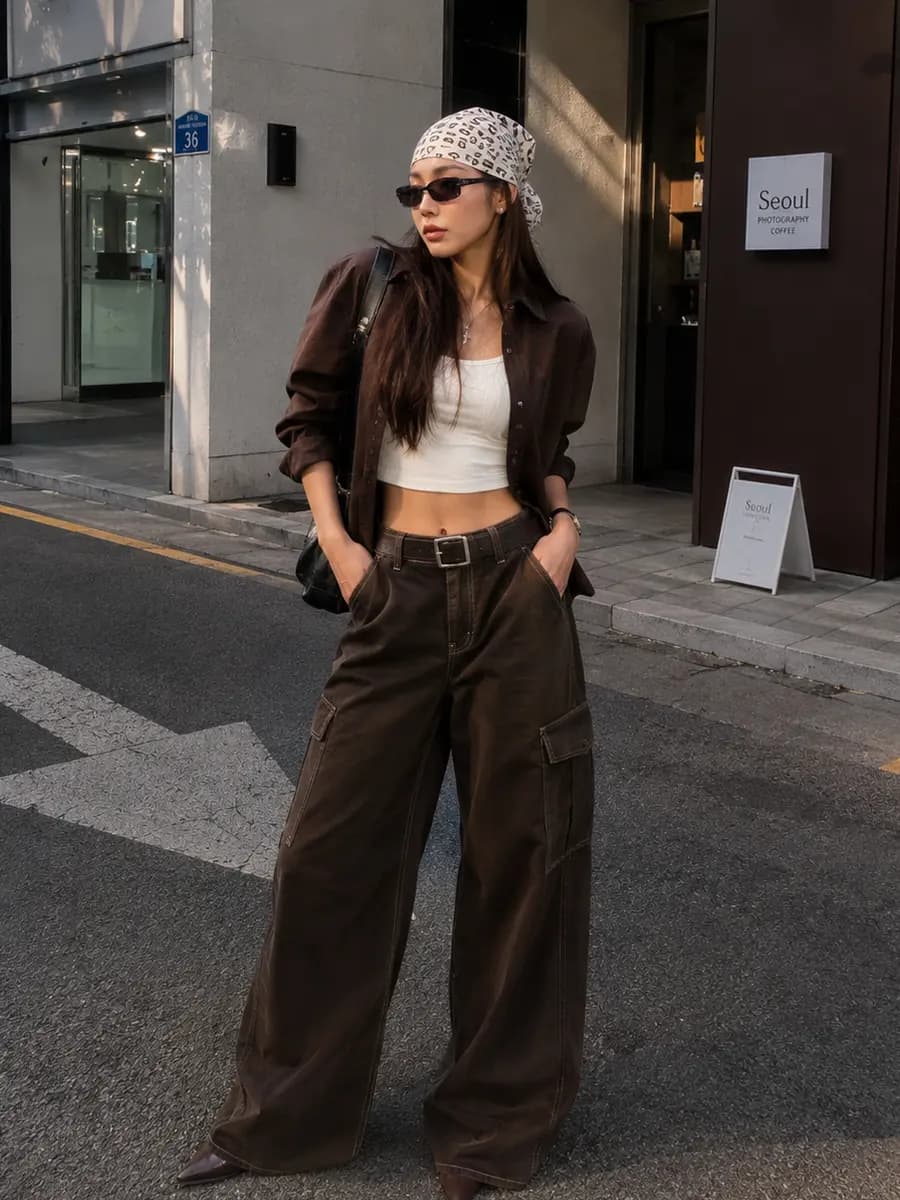
AW26: what actually moved, and what only moved on the feed
A season report written from sell-through data rather than from runway images. Six things worth buying and three that will not last the year.

Most fit advice starts from the wrong place. It tells you what to avoid, which is a way of saying that the problem is you rather than the garment. It is not. A garment is a set of measurements and a set of decisions about where fabric sits, and either those decisions suit your proportions or they do not.
Start with where things land, not with what size you are
Every design on this site carries seventeen tags, and five of them decide almost everything about how a piece will sit on you: rise, length, silhouette, stretch and fit. Size is the sixth, and it matters least, because size only tells you whether the garment closes.
Rise is not a style choice. It is a placement choice, and it changes the leg line more than any other single attribute.
Take rise. A high-rise straight leg and a low-rise straight leg in the same size, the same fabric and the same leg opening will read as two completely different garments, because the waistband sits at two different points on your torso. One divides you at the natural waist and one divides you at the hip. Neither is better. They are different lines, and one of them is the line you want today.
Length is the second thing, and it is the one people compromise on
Hem placement does the same work at the other end. A full-length trouser that pools at the ankle interrupts the leg line at the widest, softest point of the drape. The same trouser hemmed to the ankle bone breaks once, cleanly, and the line carries. This is why we tag length separately from size, and why the ankle and full versions of the same design are two entries in the catalogue rather than one.
If you have taken the quiz, this is already applied to everything you browse. If you have not, the tags are on every product page under the tag sheet, and you can filter on all of them from any listing page.